

Key Takeaways
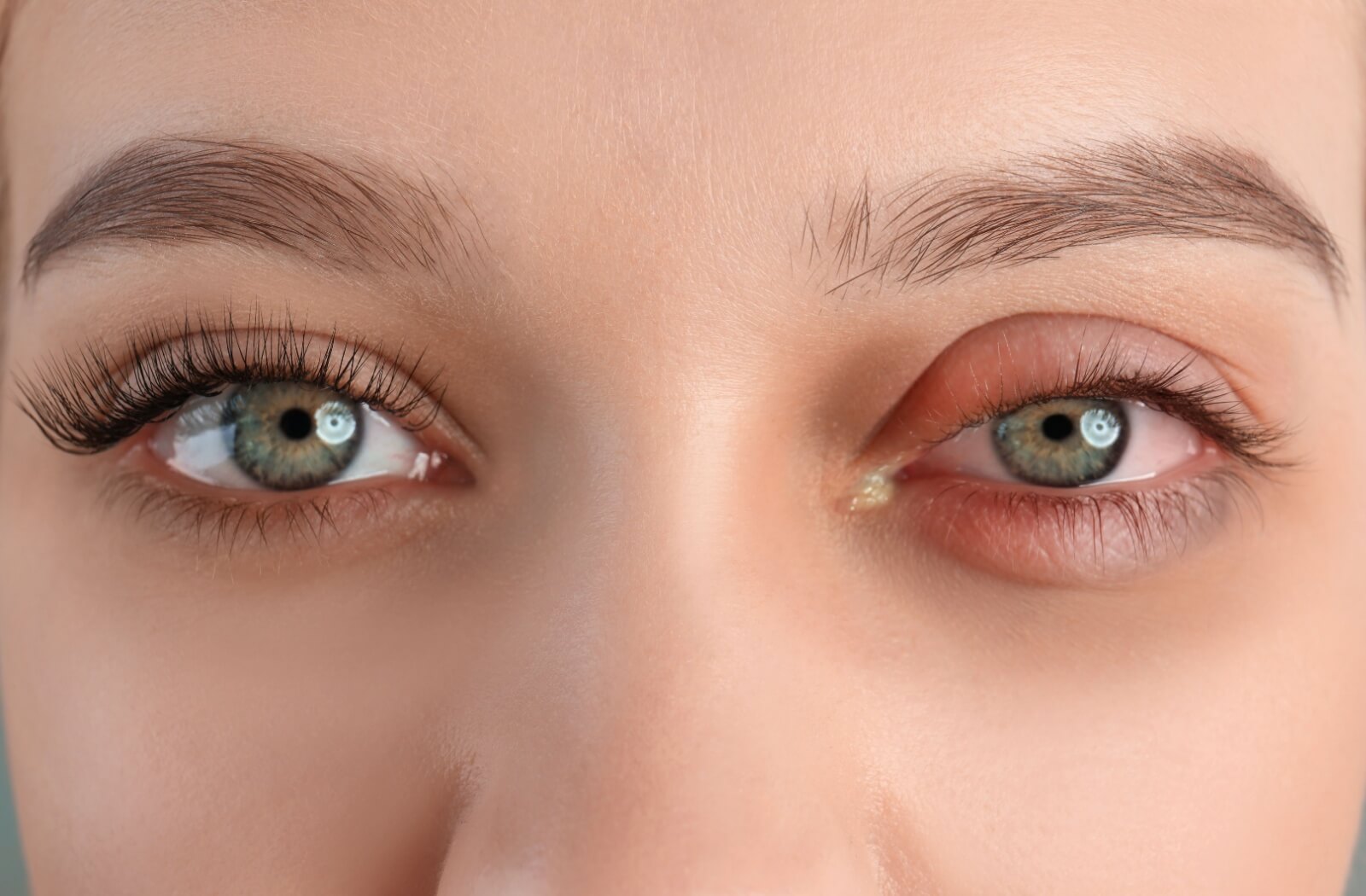
- Blepharitis is ongoing redness and inflammation along the edges of your eyelids.
- The condition itself doesn’t pass from person to person.
- Bacteria and Demodex mites can transfer through shared towels, pillowcases, or makeup brushes.
- Watch for styes, red or irritated eyelids, burning eyes, and crusty flakes on your lashes.
- Daily hygiene must be maintained (just like brushing your teeth).
- Blepharitis can be diagnosed by your optometrist during an eye exam.
You wake up, and your lashes feel stuck together. Your lids look red along the edges, they itch, and by mid-morning your eyes feel gritty, like sand settled in overnight. Then a thought creeps in when your child climbs into bed beside you: Could this spread to someone else?
Blepharitis itself isn’t contagious, so you can’t catch it from someone else or pass it along, though bacteria and demodex mites linked to it can move between people through shared items. Our doctors here at Bella Vision can diagnose and treat blepharitis and dry eye disease before it starts to affect your vision and everyday life.
What Is Blepharitis?
Blepharitis is essentially an inflammation of the eyelids. It is closely related to those individuals who also have ocular rosacea and dry eye disease. Blepharitis can come and go and “flare up” from time to time. It is caused by an overproduction of Staphylococcus aureus, a common bacteria that is considered a part of our normal flora. This overpopulation of bacteria can invade the Meibomian glands, which are the oil glands that produce the top layer of our tear film. Without adequate tear film, the ocular surface can become dry, irritated, and red, and the patient may experience a decrease in vision and comfort. Systemically, other skin issues like rosacea, seborrhoeic dermatitis and dandruff can play a role too, which is why some people notice lid trouble and skin flare-ups together.
Anterior Blepharitis
This type of blepharitis affects the outer portion of the eyelid right at the base of the eyelash. You might notice flaky dandruff at the base of the eyelash, which is a common finding in blepharitis. Patients can also experience dry eyes, styes, hordeolum and chalazions.
Posterior Blepharitis
This type affects the inner edge of the lid, the part touching your eye when you blink. It’s connected to Meibomian gland dysfunction, which is trouble with the oil glands along the eyelid margin. Not only can the patient experience infections like styes, hordeolum and chalazions, but they can also start to notice ocular dryness and redness despite treatment with drops.
Is Blepharitis Contagious or Not?
Blepharitis does not spread person to person by sharing a hug or handshake.
Bacteria and Demodex mites associated with blepharitis, however, can transfer through shared items.
Sharing items like face towels, pillowcases and makeup brushes can transfer bacteria and Demodex mites from one person to the next. Skimping on hygiene can exacerbate flare-ups and cost you in the long run.
Habits That Lower Your Risk
A few small daily habits can reduce what reaches your lids:
- Wash your eyelids and face daily with tea tree cleanser.
- Hypertonic saline spray used on the eyelids twice daily reduces bacterial overgrowth.
- If you are a contact lens wearer, keep your case clean and never sleep in your contact lenses.
- Wash your hands before you touch your eyes or lids.
- Do not share makeup or makeup brushes
- Launder and change pillowcases and face towels often.
Signs and Symptoms to Watch For
Symptoms of blepharitis can begin slowly and then suddenly worsen.
- Red, swollen, or scratchy eyelids.
- Burning, watery, or gritty feeling eyes.
- Crusty flakes on the lashes, often worse right after you wake up.

When Symptoms Need a Closer Look
If you are experiencing any of these symptoms, it’s time to call for r an eye exam.
- Dry eyes
- Eye infections or styes
- Blurry vision or new sensitivity to light.
- Lashes falling out or growing in odd directions.
- Debris along the eyelid margin
How to Care for Your Eyelids at Home
Daily lid care is simple, but you have to be consistent. Think of it like brushing your teeth! And doing it in order helps:
- Wash your hands, then hold a warm compress against your closed lid.
- Gently clean along the lash line with tea tree cleanser. Do not use baby shampoo.
- Spray the eyelids and face with hypochlorous spray and allow to air dry.
What to Avoid During a Flare-Up
Certain habits can make irritation worse. Here are some hints if you are experiencing symptoms:
- Pause eye makeup until the irritation settles. Replace old makeup and wash brushes.
- If infection occurs, a warm compress may be helpful. If symptoms persist or worsen, schedule an appointment to see your optometrist.
- Avoid contact lens wear until irritation resolves.
Does Blepharitis Ever Go Away?
For many people, blepharitis is a long-term condition managed through a daily routine rather than something that resolves and stays gone. Fair skin types are more susceptible to blepharitis and ocular rosacea. Although blepharitis can flare up with time, it can be managed with the appropriate diagnosis and treatment plan.
Conditions Often Mistaken for Blepharitis
Pink eye, styes, chalazia, and dry eye can all produce red, irritated, uncomfortable eyes. An exam sorts out which one you’re dealing with, so your care matches the actual problem.
How an Eye Doctor in Spartanburg Can Help
At Bella Vision, our eye doctors in Spartanburg can provide a comprehensive assessment if you are experiencing dry eyes or blepharitis. We use the latest technology with the Oculus Keratograph to image the lids, lashes and anterior segment structures so we can appropriately monitor the disease process. Once we understand what is causing the inflammation, an eye drop, ointment, or other treatment will be prescribed.
We Can Help
If you are currently struggling with irritated red eyelids, book an eye exam with our doctors at Bella Vision. We can’t wait to help you.