
Key Takeaways
- Dizziness while driving can feel like spinning, floating, or being off balance.
- Eye misalignment and reduced eye tracking can contribute to dizziness and balance issues.
- Depth perception and peripheral vision are essential to driving and difficulties should not be ignored.
- Blurry vision, glare, dry eyes and stress can further exacerbate symptoms
Why Do I Get Dizzy While Driving?
This is quite a common complaint I receive from patients…”Why am I OK in the car if I’m the one driving, but feel dizzy if I’m the passenger?” Most patients mistakenly contribute these issues to a sign of aging, and for others, it’s “just how it’s always been,” so there’s not much to be done about it. The real truth lies within how our brain perceives peripheral motion and how effectively and efficiently process central-peripheral information.
- That unsteady feeling may have an explanation, and our doctors at Bella Vision can properly test, diagnose and provide a treatment plan to improve your vision. Dizziness while driving often occurs when our brain does not cohesively integrate signals from eyes, inner ear, and body. Often, eye alignment or eye teaming issues can contribute to the problem.
What Dizziness Behind the Wheel Feels Like
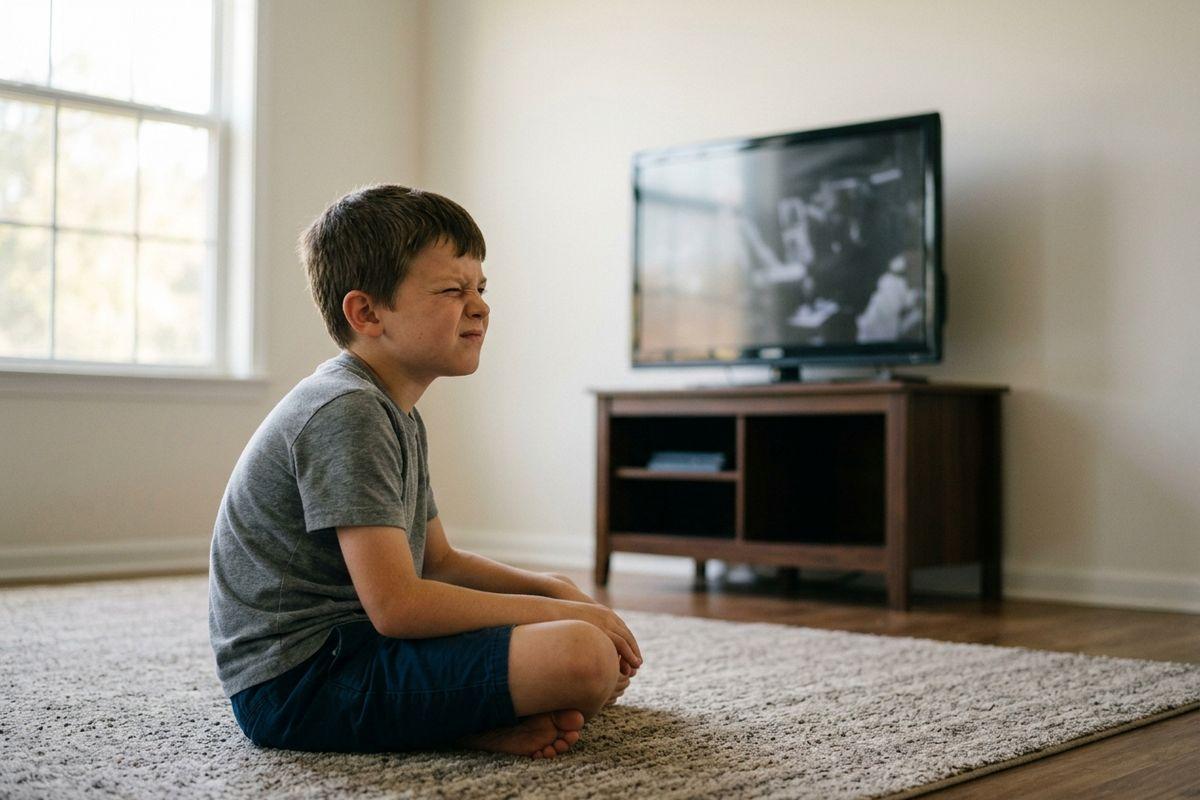
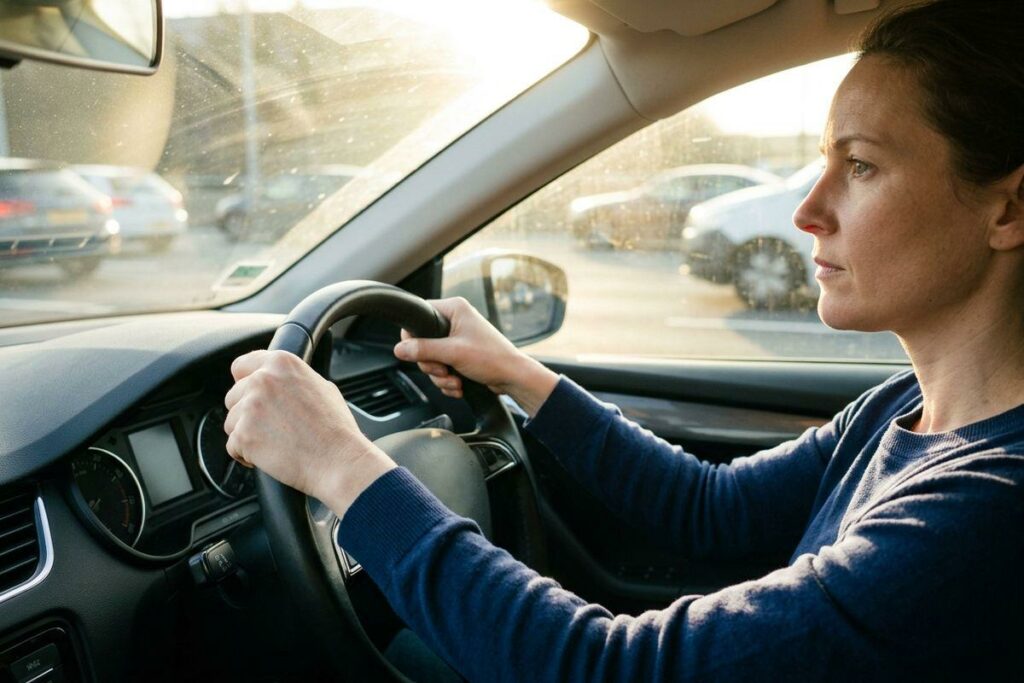
Movement in our peripheral vision can be interpreted in many different ways. For some, it is a sudden, spinning sensation. For others, they report that it feels like their eyes aren’t focusing correctly. It can be triggered by certain things like merging into traffic, taking a windy exit ramp or feeling claustrophobic in traffic.
Sometimes these symptoms are short-lived, but any visual symptom that makes you feel disoriented while driving or at any other time is worth paying attention to.
Common Reasons You May Feel Dizzy While You Drive
Mixed Signals Between Your Eyes and Brain
Your brain is what “sees” and translates the images your eyes receive into meaningful information. Binocular vision dysfunction and inner ear conditions, including positional vertigo, can cause vestibular issues not only while driving but also when doing simple tasks like bending over to pick up something. When there is a conflict between what your brain sees and the proprioceptive information, motion sickness and dizziness can occur.
Eye Alignment and Teaming Trouble
If there is an eye misalignment, your eyes and brain have to exert more effort to keep a single, clear image. With fatigue, it is more challenging to maintain which can cause ongoing symptoms.
Binocular vision dysfunction and strabismus are two conditions linked to this kind of misalignment. Both involve how your two eyes work together as a team to provide one clear, single image.
Everyday Factors on the Road
External factors like glare off the windshield, glare from oncoming headlights at night, and long hours behind the wheel without a break can all contribute to symptoms.
Vision-Related Signs to Watch For
Dizziness can also be accompanied by other visual symptoms. Here is what to look out for and to report to your eye doctor:
- Blurred or double vision while you’re driving or reading road signs
- Trouble with depth perception ( judging distance), like how close the car ahead really is
- Sensitivity to bright light, headlights, or sunlight
- A disoriented feeling in busy visual settings
- Carsickness as a passenger, not just as the driver
- Side vision seems to move or shift on its own
- A sense of motion even when your car is stopped at a light
What to Do If You Get Dizzy While Driving
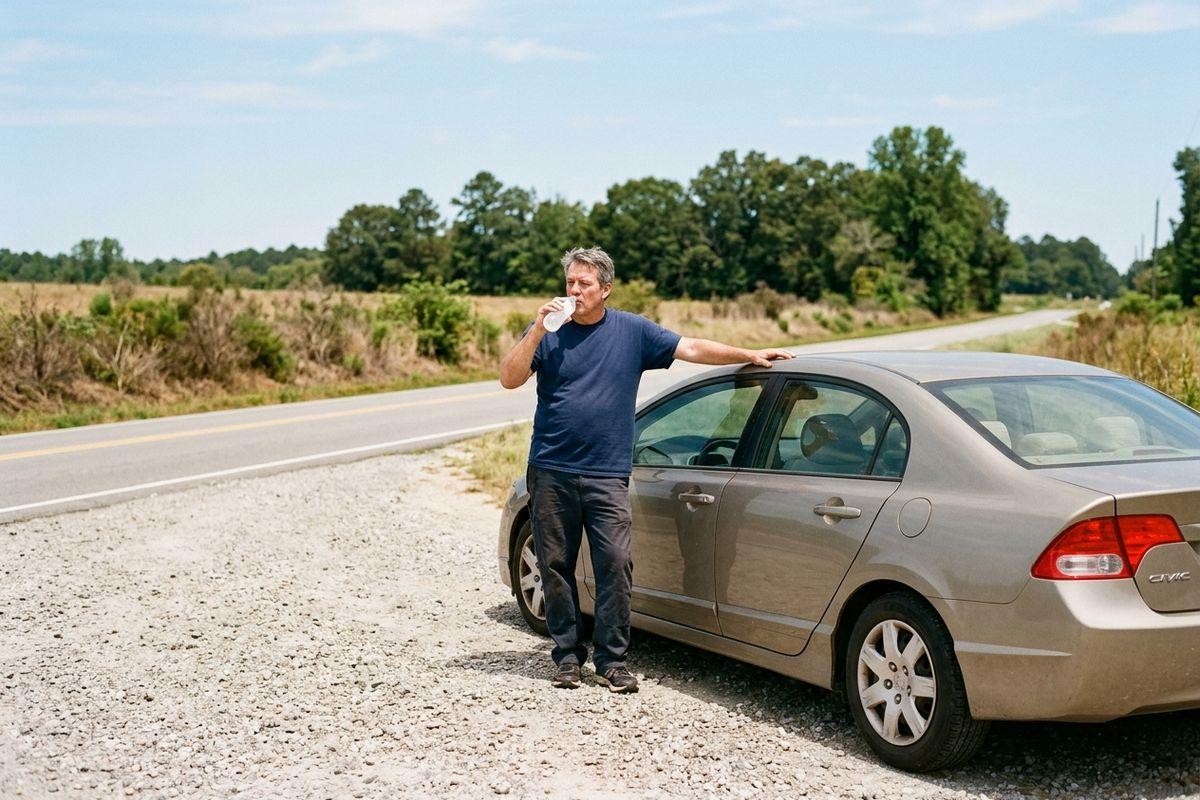
- Pull over somewhere safe and give yourself a few minutes to pause.
- Step out of the car, walk around, and drink some water.
- Limit night driving and heavy-traffic routes until you know more about what’s going on.
- If driving with someone, ask them to take over to give you a break.
When to Book an Eye Exam
I always recommend annual eye exams since “you only have 2 eyes,” and prevention is the best way to continue to have clear, single, healthy vision. If you are experiencing any of the following, you should schedule a comprehensive eye examination:
- Your dizzy spells repeat or seem to be getting worse
- You get headaches or neck tension after driving
- Reading leaves you uncomfortable, tired, or lightheaded
How Bella Vision Can Help
A comprehensive eye exam looks at more than how clearly you see letters on a chart. Our optometrist here at Bella Vision also includes binocular testing, which allows us to see how your eye and brain are working together
The good news is that we can improve visual function and reduce symptoms sometimes with just the right prescription lens. We prescribe therapeutic tints and prism successfully every day, which provide our patients with an improved visual world all around – not just driving. For some patients, we prescribe Vision therapy in order to improve binocular function and restore eye alignment and eye tracking. We can also refer you to the right provider for treatment and testing should no vision issues be found.
Take the Next Step Toward Steadier Driving
You shouldn’t have to white-knuckle your way through every merge. If dizziness keeps showing up behind the wheel, an eye exam is a reasonable place to start looking for answers.
Reach out to Bella Vision to schedule your comprehensive eye exam and talk through what you’ve been feeling on the road.